






More questions than answers
Dear Editor,
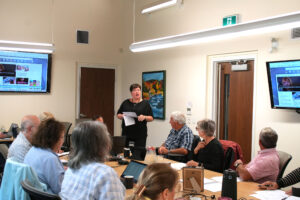
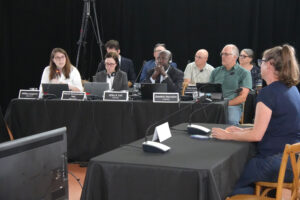
The last of the Pontiac MRC public information meetings on the incinerator has come and gone. So, where are we now? In my opinion, we’re not a lot further ahead in knowing what we are facing than we were before the road show started. The five meetings were populated by people opposed to the project, with the warden revealing at the final meeting in Otter Lake that there are many people in favour of the project, but they didn’t come out because they feel intimidated. I’m unsure how she could possibly know this as fact. I guess it comes from the special spidey-senses you receive when you’re the warden.
They (supporters) are certainly a quiet bunch. They don’t write letters to the editor, or have Facebook support pages to share their views. Or bumper stickers. Or lawn signs. Or support petitions. Almost total silence except for a brave few that came out to the meetings. Civil debate and sharing of opposing views is good, and how democracy is supposed to work.
But there are still more questions than answers at this point. The warden, who is obviously under a lot of pressure, seems quick-tempered and looks to be running out of patience with the people. That’s not a good look. The MRC admits that the information in their presentation doesn’t reflect reality any longer, since they really don’t know who the players will be, or the size of the proposed incinerator. The costs are hard to pinpoint, but they will be huge. Then, there’s the lurking reality of the environmental and health concerns that go along with importing possibly up to 400,000 tons of other people’s garbage to burn in our backyard. To say that the incinerator proposal itself has become a smoldering dumpster fire is fairly accurate.
Meanwhile, we all wait, as council after council across the Pontiac MRC pass motions to withdraw support of the incinerator plan. Kudos to them, and I hope that more mayors and councils get on board and listen to what the people are telling them. At some point, when more councils oppose the idea than are still in favour, it will hopefully come to a vote at the MRC and the idea will be cast aside once and for all.
But for all the negativity generated by the series of town hall meetings over the past couple of weeks, there is one positive thing we all learned. It was revealed at the Campbell’s Bay meeting that the Pontiac pool project is still very much alive, and should be a reality in the not too distant future. Let’s hope this is true, and not just another empty promise. I look forward to taking a cool dip while waiting for the incinerator decision to come.
Gerry Bimm, Otter Lake
Reality check needed asap
Dear Editor,
I attended the town hall information session in Otter Lake on Apr. 10. This was the last scheduled session. I have been a resident of Otter Lake for close to 50 years. I am very proud of our mayor and councillors who were the first to take a stand against the installation of an EFW incinerator.
Through the past months, I have tried to stay objective and listen to all information, opinions and reports that have been made public through the local newspapers to weigh the pros and cons. This information session was, for me, the turning point from profound skepticism to a decisive no.
The MRC leaflet made available at the session said, and I quote, “The MRC Pontiac will work with the residents of the Pontiac and with the Ministry of Environment to ensure that all voices are heard and a safe technology is chosen. We will not move forward unless our proposed solution, whatever that may be, is healthy for everyone and acceptable to the general public.”
Figures in the millions get bandied about as if it was pocket change. This is your money. Whether the involvement of federal and provincial governments means an investment of at least 75 per cent of the cost or not, this is still coming out of tax payers’ pockets. Your pockets. When one considers that both levels of government are currently in such deep deficit situations, it leaves one to wonder where is this kind of money to be found. We have become oblivious to how much money this entails. We have truly lost touch with reality.
From the initial estimate of $450 million we are now talking approximately $600 million-plus, which could reach an astounding $825 million for the version that includes carbon capture.
All these figures have changed in the space of a few months’ time. What is this grandiose facility really going to cost? Ever hear about government cost-plus projects? We’re looking at one. The benefits, one of which was the possibility of 50 permanent jobs, certainly doesn’t justify the means. This is a financial fiasco in progress. And it won’t cost residents a cent – where have I heard that line before?
For the other 25 per cent, apparently we will have partners to support and finance this project. Where do we draw the line between partners vs customers? Will that mean that we will look after their problem of disposing of their garbage, and that since they are partners they will have a say in the administration of the operation of this facility, probably proportional to the amount of garbage they ship? Since we produce, comparatively speaking, a very modest amount of garbage, they will say “jump” and all we will be able to do is to ask “how high?” and say “thank you so very much for your garbage.” We will take all the risk and they will reap all the benefits – a win-win situation for them, don’t you think? Really?
The City of Ottawa that comprises over one million people has been able to reduce their waste substantially. If they can do it, why can’t the Pontiac? One also has to wonder, if all the partners/customers follow the same trend, which is environmentally sound, can we then keep this incinerator operational at the capacity it is designed for? If not, then how does it pay for itself or, a better question, who will pay to keep this hungry beast’s appetite satisfied?
The presentation showed all the filters that are “supposed” to virtually eliminate gas emissions. It looks good on paper. In practice, however, with human error, technical failures, etc., then what happens? We sit back and wait to hear that dreaded four-letter word, “OOPS”.
How well will these air-quality controls work, third party monitoring or not? By the time these quality-control readings become public, the damage will have been done to human health, livestock, wildlife, environment, etc., not to mention the cost of the legal liability claims that are bound to follow. The presentation did nothing to allay my concerns for the citizens of the Pontiac, especially those who live in close proximity to the proposed site.
According to the MRC information sheet, this project will not move forward until it is “acceptable to the general public”. From the feedback of other town hall sessions and having attended our own, Ms. Toller, do you still feel that you have the public’s backing? Extremely little support has been shown, except for the odd letter supporting you, the warden, the rest has been negative. This is not a popularity contest, people. Ms. Toller, are you listening but not hearing what your constituents are saying?
If you are truly concerned about the health of your constituents, why not take the pulse of the people? Hold a referendum! If a referendum can only be held at the time of elections, it’s not that far down the line but, in the meantime, put this whole project on hold.
Until you have proven that you do have the consent and approval of the citizens of the Pontiac, as per your initial criteria, why spend one more cent of taxpayer’s hard-earned money to promote this endeavour?
Elected public officials deserve to be treated respectfully. Our elected representatives should also be held accountable for decisions made for us. They are acting on our behalf for the good of their municipal constituents. Having said that, however, before anyone starts pointing fingers at just them, we collectively as constituents should also be held accountable. To whom? To the generations to come. We should be leaving this planet in as good a shape, if not better, than what we inherited. Habits are hard to change, especially bad ones. This is the wake-up call. We have to reduce the waste we produce. Will it be easy? No, but we have to start somewhere, and it can be done. It is not impossible.
Everyone, please take the time to think about the what this project will mean to you and your families, both in terms of your health and financially. For the citizens of the municipalities that are still undecided about supporting this venture, if you have questions, concerns, opinions, make your voices heard to your mayors and councillors. They need your feedback, good or bad. They will be making these important decisions on your behalf at that MRC table.
Glenda Beauregard, Otter Lake