


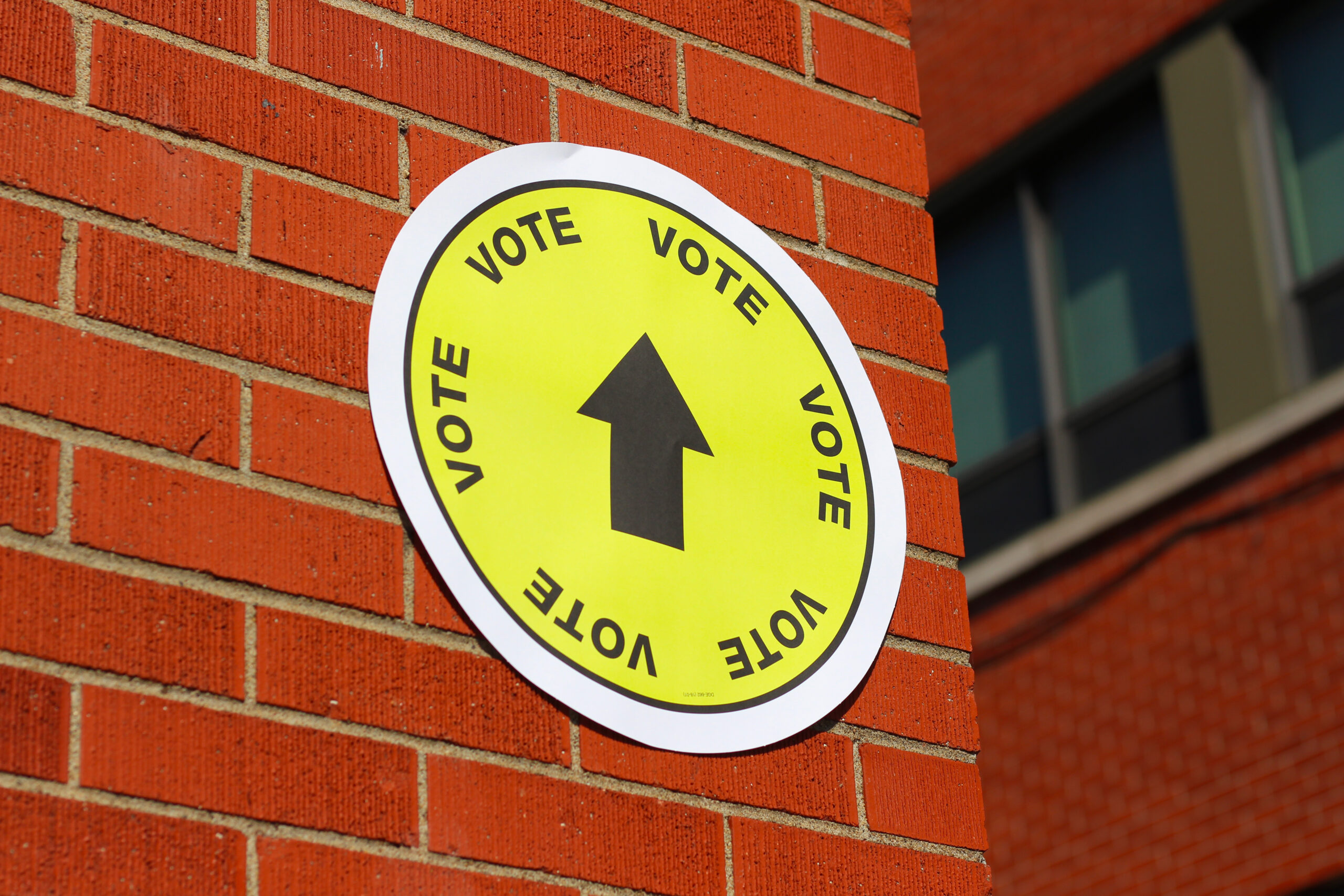



Voter cards and other election guidelines from Élections Québec will only be available in French in this election, for the first time in this province’s history.
Élections Québec spokesperson Julie St-Arnaud-Drolet told THE EQUITY in an email that the decision to remove English information normally included was not made by the agency, but rather that Élections Québec is complying with the changes to the province’s language laws (Bill 96), passed by the CAQ in 2022.
“Written communications from the administration—such as those we send to voters during an election period—must be exclusively in French,” St-Arnaud-Drolet wrote in French. “We attempted to obtain an exception allowing us to provide voting information in both English and French during an election, but we were not granted authorization to do so.”
English-speaking voters will still be able to access documents and information in their mother tongue through the Elections Québec website via a scannable QR code included on the mailed documents. But organizations in the Pontiac and across the province are raising concerns over potential barriers this could pose to seniors wanting to cast their ballot.
The 2021 census found that roughly 8,880 of the region’s 14,764 residents claimed English as their first language. The population of seniors 65 years and older in the Pontiac is 3,920.
Greg Graham is executive director of the Western Quebec Literacy Council (WQLC), which works to support literacy skills across the Outaouais’ English-speaking population. He is no stranger to the challenges faced by seniors in the Pontiac.
“From a digital literacy standpoint, using a QR code is assuming the person has a cell phone, has access to the internet, and has the skills and knowledge to complete the task,” he said.
According to Statistique Québec, in 2022, roughly 22 per cent of the province’s population aged 65 and older lacked access to the internet at home.
The WQLC is advising anyone who needs help understanding their voting information to reach out by phone (1-888-647-3112) or email (info@wqlc.org) for assistance.
“If anybody calls or emails us, we will arrange to help them, however we can,” Graham said. “We’ve got volunteers who help people with all sorts of literacy challenges. We just deal with that on a case-by-case basis.[ . . . ] We’re racing to provide all the help that we can. We have a big enough job on our own without new issues coming forward like this.”
The English rights advocacy group Talking Advocating Living in Quebec (TALQ) issued a press release on Tuesday calling on Élections Québec and Quebec’s Chief Electoral Officer, Jean-François Blanchet, to reverse this decision.
“This is fundamentally an issue of democratic participation, not language politics,” said Eva Ludvig, president of TALQ.
“TALQ fully recognizes the importance of French as Quebec’s official language. But our electoral system should maximize participation, not put additional barriers in the way of voters [ . . . ] Scanning a QR code or making a special request may seem like a small step, but for some citizens, it can make essential electoral information harder to access.”
On Wednesday, CBC News reported that Premier Christine Fréchette was in talks with the elections office to determine exactly how the province’s language laws apply to this situation, but on Thursday she confirmed her government would not be reversing the decision.
“No one is being denied access to information, no one is being denied the right to vote. The information remains available in English, and the rights of the English-speaking community are being respected as well,” she said in a press conference while on the campaign trail.
“As you know, the ballot remains bilingual, and it will stay that way. We can be proud, I think, to defend our language, and I must say that the charter protects the French language, yes, but it also protects the rights of Quebec’s English-speaking community, and I will never call those rights into question.”
When asked by a journalist from the Montreal Gazette why her government did not grant an exception from Bill 96 for election communications requested by Elections Quebec, she said her government is applying the laws and rules that have been adopted.
“We have adopted rules, and French is the official language of Quebec and we are applying the rules we have.”
Les cartes de l’électeur et autres directives électorales d’Élections Québec ne seront disponibles qu’en français pour cette élection, une première dans l’histoire de la province.
Julie St-Arnaud-Drolet, porte-parole d’Élections Québec, a affirmé au journal THE EQUITY par courriel que la décision de retirer les informations en anglais habituellement incluses n’avait pas été prise par l’organisme. Élections Québec se conforme plutôt aux modifications apportées aux lois linguistiques de la province (loi 96), adoptées par la CAQ en 2022.
« Les communications écrites de l’administration — telles que celles que nous transmettons aux électeurs en période électorale — doivent être exclusivement en français », a écrit Mme St-Arnaud-Drolet en français. « Nous avons tenté d’obtenir une exception afin de pouvoir transmettre les informations de vote en anglais et en français pendant une élection, mais nous n’avons pas obtenu l’autorisation de le faire. »
Les électeurs anglophones pourront toujours accéder aux documents et aux informations dans leur langue maternelle via le site web d’Élections Québec au moyen d’un code QR scannable inclus sur les documents postés. Cependant, des organismes du Pontiac et de toute la province s’inquiètent des obstacles potentiels que cela pourrait créer pour les personnes âgées souhaitant voter.
Le recensement de 2021 a révélé qu’environ 8 880 des 14 764 résidents de la région ont déclaré l’anglais comme première langue. La population de personnes âgées de 65 ans et plus dans le Pontiac est de 3 920.
Greg Graham est directeur général du Western Quebec Literacy Council (WQLC), qui œuvre à soutenir les compétences en littératie au sein de la population anglophone de l’Outaouais. Il connaît bien les défis auxquels sont confrontées les personnes âgées du Pontiac.
« Du point de vue de la littératie numérique, utiliser un code QR suppose que la personne possède un téléphone cellulaire, a accès à internet et possède les compétences et les connaissances nécessaires pour accomplir la tâche », a-t-il déclaré.
Selon Statistique Québec, en 2022, environ 22 % de la population de la province âgée de 65 ans et plus n’avait pas accès à internet à domicile.
Le WQLC conseille à toute personne ayant besoin d’aide pour comprendre ses informations de vote de le contacter par téléphone (1-888-647-3112) ou par courriel (info@wqlc.org) pour obtenir de l’aide.
« Si quelqu’un nous appelle ou nous envoie un courriel, nous ferons le nécessaire pour l’aider, de quelque manière que ce soit », a dit M. Graham. « Nous avons des bénévoles qui aident les gens avec toutes sortes de défis de littératie. Nous traitons simplement ces cas un par un. [ . . . ] Nous nous empressons de fournir toute l’aide que nous pouvons. Nous avons déjà une tâche assez lourde sans que de nouveaux problèmes comme celui-ci ne surgissent. »
Le groupe de défense des droits des anglophones Talking Advocating Living in Quebec (TALQ) a publié un communiqué de presse mardi, appelant Élections Québec et le directeur général des élections du Québec, Jean-François Blanchet, à revenir sur cette décision.
« C’est fondamentalement une question de participation démocratique, pas de politique linguistique », a déclaré Eva Ludvig, présidente de TALQ.
« TALQ reconnaît pleinement l’importance du français comme langue officielle du Québec. Mais notre système électoral devrait maximiser la participation, et non ajouter des obstacles pour les électeurs [ . . . ] Scanner un code QR ou faire une demande spéciale peut sembler une petite étape, mais pour certains citoyens, cela peut rendre l’accès aux informations électorales essentielles plus difficile. »
Mercredi, CBC News a rapporté que la première ministre Christine Fréchette était en discussion avec le bureau des élections pour déterminer exactement comment les lois linguistiques de la province s’appliquent à cette situation, mais jeudi, elle a confirmé que son gouvernement ne reviendrait pas sur cette décision.
« Personne ne se voit refuser l’accès à l’information, personne ne se voit refuser le droit de vote. L’information reste disponible en anglais, et les droits de la communauté anglophone sont également respectés », a-t-elle déclaré lors d’une conférence de presse en campagne électorale.
« Comme vous le savez, le bulletin de vote reste bilingue et le restera. Nous pouvons être fiers, je pense, de défendre notre langue, et je dois dire que la charte protège la langue française, oui, mais elle protège aussi les droits de la communauté anglophone du Québec, et je ne remettrai jamais ces droits en question. »
Interrogée par un journaliste de la Montreal Gazette sur la raison pour laquelle son gouvernement n’avait pas accordé d’exception à la loi 96 pour les communications électorales demandées par Élections Québec, elle a répondu que son gouvernement appliquait les lois et les règles qui ont été adoptées.
« Nous avons adopté des règles, et le français est la langue officielle du Québec, et nous appliquons les règles que nous avons. »