





Our own local history has always been very interesting to me. We took history in school, but it was about ancient times. People were always fighting, it seems. Their kings and rulers called the shots, but it was the soldiers and citizens who had to do the fighting. Whether it was BC, the Roman, Europeans, Asians, English, French, Irish, or whoever else, it was always the same. Sometimes it was because of a famine in one country, and their king attacked the neighbor to get grain. Sometimes it was over religion. Mostly it came down to greed.
Most of the “new world” was settled by people from Europe seeking free or almost free land. At that time, most of the “old country” was owned by kings, queens, or dictators. Although it was a hazardous trip by a tiny wooden boat to get to the new world, many decided to seek out a new home.
Early Canada (New France) was first settled by the French around Quebec City, and Port Royal in Nova Scotia. New England was started by pioneers from England in the Connecticut and Massachusetts area of the U.S. As the best land was taken up, settlers moved farther inland. The Appalachian Mountains trapped New England’s growth between those mountains and the Atlantic ocean for many years. When a group of New Englanders became uneasy with the way England was treating them, they started the independence movement. That encouraged some to move north away from Connecticut, then Massachusetts, and later on Vermont to either Lower Canada or Upper Canada.
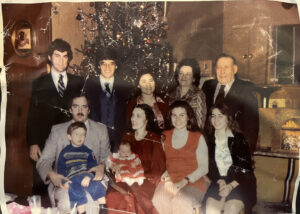
Many families were torn apart by either loyalty to the Crown or to the newly founded America. Our family was one of those. Some signed the Declaration of Independence, while others moved north. While one cousin was a friend of Abraham Lincoln and gave up his governorship of Illinois to help Abe get elected, another was a nurse in the confederate army. It seemed like our side of the family was more peaceful than the other. One of my ancient cousins started a tannery in Saint-Eustache in Lower Canada, and my great-grandfather was born there. They left Saint-Eustache when Les Patriots tried to overturn the English rule, resulting in many deaths. That’s why our family moved to Greer Mount in Upper Canada.
Much of Pontiac County was settled by the Irish because the Crown of England (who owned the land) sent soldiers into the countryside to take all the food that royalty needed before the farmers who grew it could eat it. Then there was the war between the Protestants and the Catholics in Ireland, fought for over a century. Again, some of my ancestors left Ireland for Canada for free land and no fighting.
After fighting in Africa, Europe, and Ireland, a retired army general (Pendergast) was given the job of surveying the land that we settled in, now Clarendon, and allotting land to new pioneers. Because he had fought in wars that killed thousands and lasted years because of religious strife, he decided that no Catholics would be given land in his township. Pendergast told any Catholic wanting land that there were better lots of land both east and west of Clarendon. He didn’t want any fighting over religion in his township.
Pendergast made one exception. When fighting in Africa, a Catholic friend had saved his life. He gave a lot to that man with the promise that he would never tell. I know one family that changed their religion from Catholic to Protestant to get a lot in Clarendon. Early pastors, priests, and religious leaders traveled on horseback from one pioneer to another and the religion that they represented was not as important as the fact that they believed in a better place after death.
More than two centuries later, West Quebec is now home to residents with Irish, English, Scottish, French, Australian, Welsh, South African, German, Polish, Indian, Chinese, Italian, Pakistani, Vietnamese, and other backgrounds, along with people from various First Nations that were here long before the rest of us. There are many different skin colors and religions, and we all accept and enjoy each other’s culture. Why cannot other areas of our province, country, and other parts of the world be peaceful and contented like us?
Chris Judd is a farmer in Clarendon on land that has been in his family for generations.