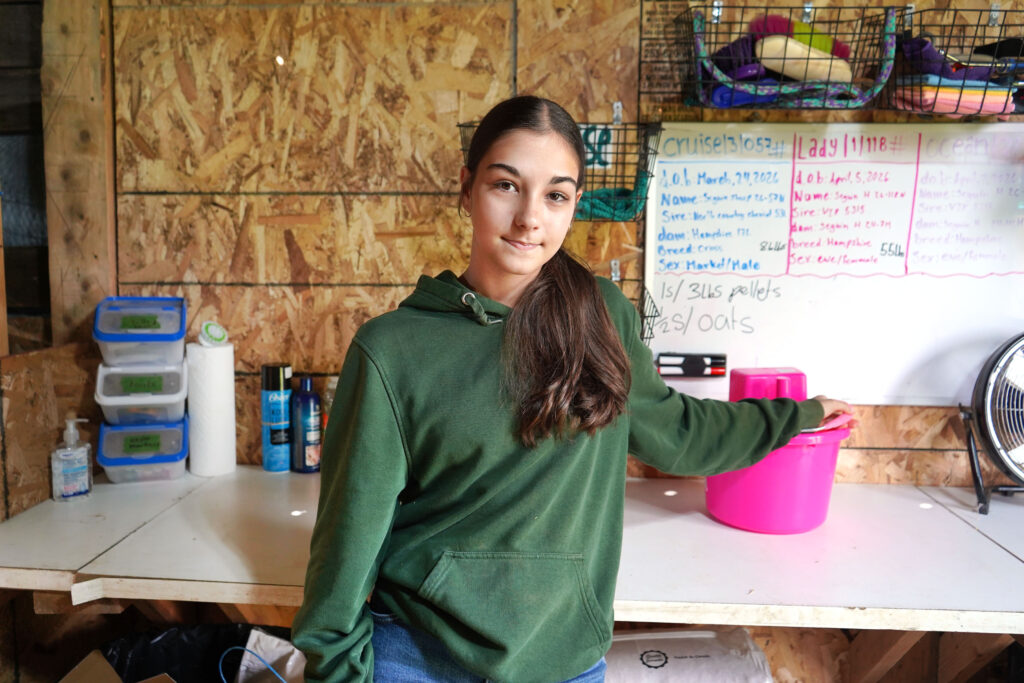




Though Bria Pieschke grew up in farm country, she didn’t grow up in a farming family. It wasn’t until her best friend’s family named a newborn calf after her that the Calumet Island native, then 10 years old, decided she might give 4-H a go.
“It was my birthday, my best friend was over, and her dad messaged her that there was a calf that was just born,” Pieschke said. “They asked me if I wanted to show it. I said yeah sure. I didn’t really know what 4-H was.”
Pieschke loved it so much that she stuck with it. Though the learning curve was steep, she had good friends to show her the ropes.
“My friend Morgan [Tracy] that got me in, and her cousin Peyton [St-Pierre], they helped me a lot to learn. Because my grandparents don’t really know anything about agriculture, so I was doing it all on my own.”
Pieschke soon found that caring for other creatures and immersing herself in learning all that goes into raising and showing animals helped her find sturdy footing through an unusually rocky childhood.
In 2021, when she was just nine years old, her father died suddenly of a heart attack. With her mother not in the picture, Piescke moved in with her grandparents on the Island.
“Learning new things helps, because you’re trying to concentrate on learning something new that you’re passionate about. You don’t think about what happened as much,” she told THE EQUITY.
She said the task at hand of absorbing all of this new information was a welcome challenge.
“I didn’t know what I was doing that much. I felt like I was running around with my head cut off,” she laughed. “I felt different, because I knew I didn’t know what I was doing, and everybody else did, and they were doing really good. So I was like, ok I’ve got to learn to get better.”
After two years of showing dairy heifers, Pieschke decided to explore other animals. Last year she began showing sheep after Clarendon farmer Donna Courchesne offered her an animal to show.
“I started doing a lot on my own, because I kind of had to figure it out a lot on my own,” she said.
“I was always going back and forth [to Clarendon], because we weren’t set up here yet. We didn’t have a place to keep any animals.”
What she loved about raising and showing sheep was that they were the only larger animal that she could manage on her own.
“And they’re not as high maintenance as a cow. They’re pretty calm and don’t require a lot of things,” she said. “I love how friendly they become, and how cute they are.”
The independence sheep afforded Pieschke was exactly what she was looking for, and she quickly began the work of trying to convince her grandparents to let her keep sheep at home.
“It took me a long time to even convince my grandparents to even let me have the idea of getting sheep here,” she said. “I was just telling them that if I get a market lamb I’ll be able to put it towards my education, because I want to be a large animal vet.”
Though her grandparents had some logistics to consider – such as where the animals would be kept, for example – her grandfather Mike Pieschke said he would have never dreamed of stopping Bria’s ambition.
“Let’s put it this way. If a kid wants to do something in life, they want to get off the couch and move, I have no problem with it. I just support them, she tells me what she wants, and I just do the best I can to help her out,” he said. “She’d been at it for quite a while. And every time she wants to do something, she puts her mind to it.”
Between last year’s Shawville Fair and this spring, Pieschke saved up the $3,000 she needed to buy all the supplies needed to keep sheep, and to purchase the sheep themselves.
The small craft business she runs making jewelry and other items she sells at markets supported this goal, as did her careful saving of the Christmas and birthday money she received in the past year.
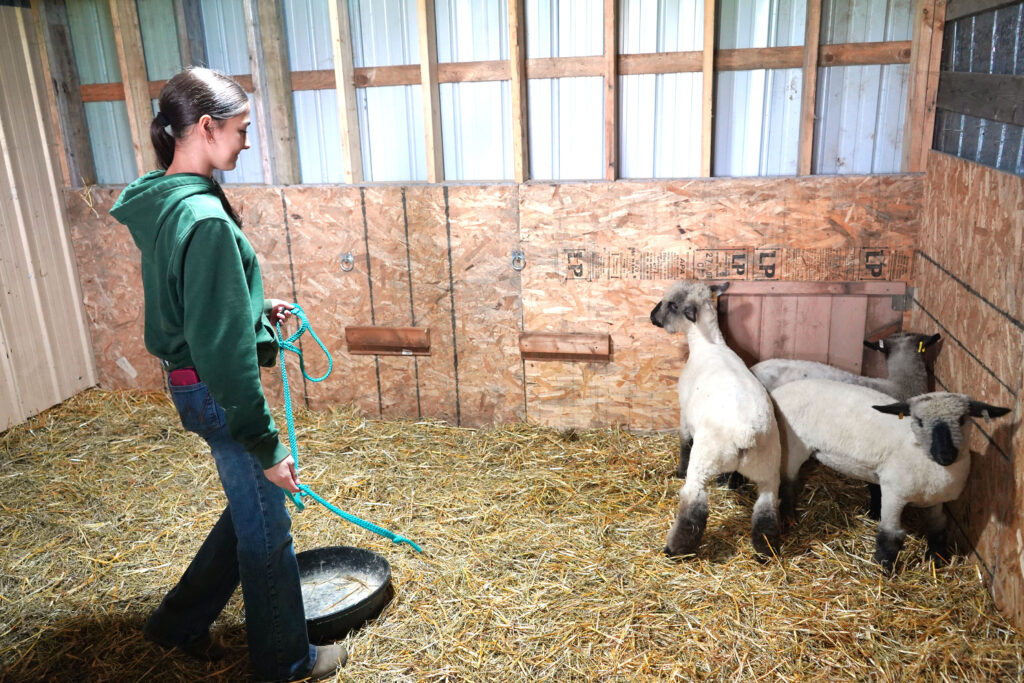
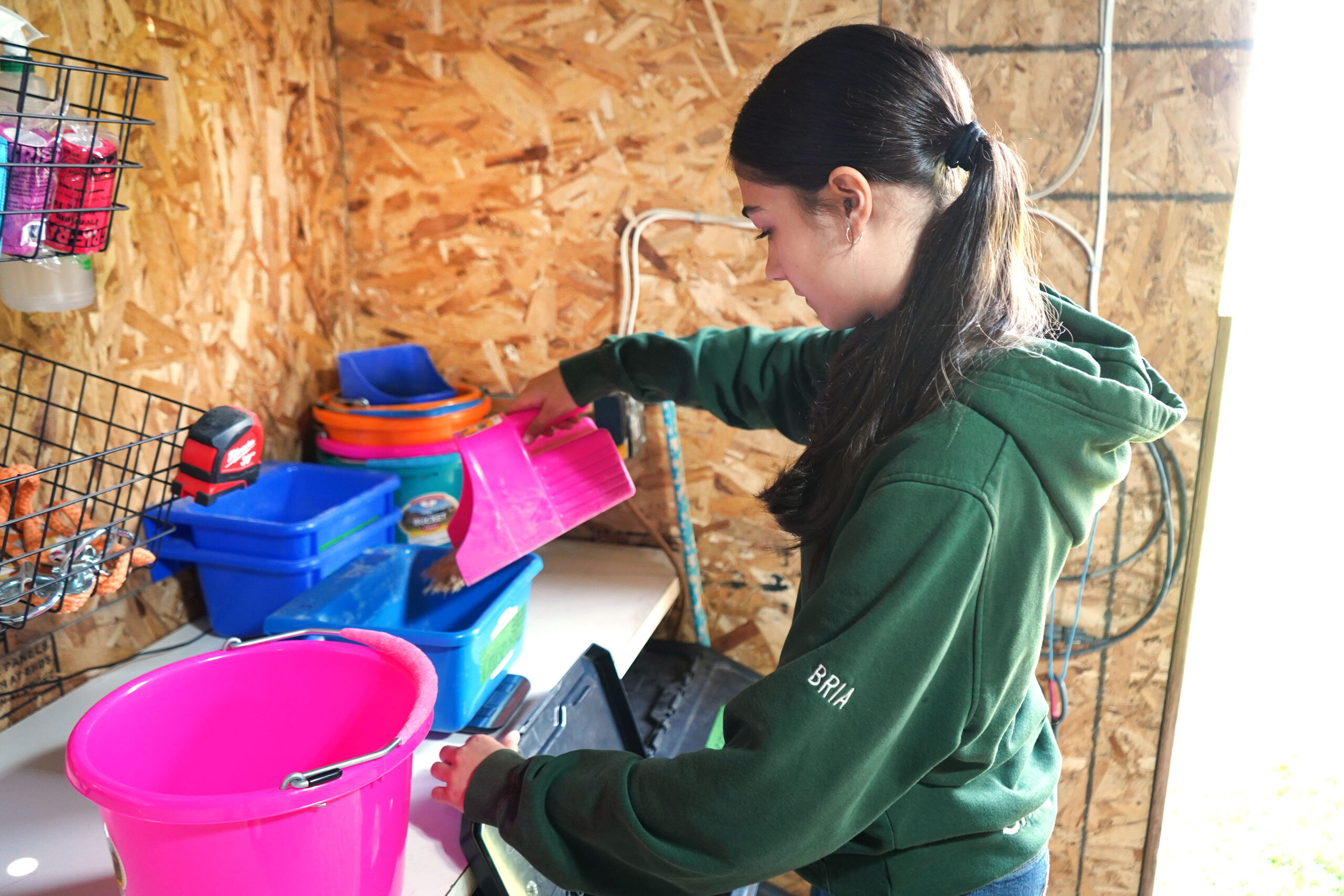
She then helped her grandfather convert the back end of his wood shed into a make-shift barn, which she keeps meticulously clean and organized. Then came time to buy her animals.
“I wanted the fluffy sheep with the fluffy legs and heads, I was looking for Hampshires because they’re cute and they get big,” she said, explaining she wanted a taller breed so that she doesn’t have to bend down while she’s showing them.
She knew she wanted three sheep – one to use as a market lamb, and two that could spend the winter together, as they’re not meant to live alone.
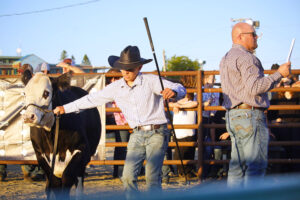
At this year’s Shawville Fair, she will be showing a market lamb, a ewe lamb, and a beef heifer, which is new for her.
She said through this experience, she’s learning more about how controlling your own emotions as a showperson can help your animal also relax.
“Your animal can pick up on how you feel and how you breathe. If you’re stressed they can feel that too. If they’re mad, you can feel that,” she said. “But if you stay calm, you take deep breaths and stuff, they’re calm too.”
Looking ahead, Pieschke said she is hoping to show her sheep as yearlings next year at local fairs.
“And then I’ll probably end up trying to breed them so I can start making my own lambs, if it goes well.”