



This reflection about the significance of Remembrance Day was written by WWII veteran and longtime Shawville resident Stanley Hogg before he passed away in 2016 at the age of 93.
Hogg’s reflection was shared with THE EQUITY by Campbell’s Bay resident Lawrence Stafford, who got to know Hogg in the last years before he died.
Stafford said he spent many hours listening to Mr. Hogg and his wife Edith share stories about Hogg’s experiences in the war, which began with D-Day. Stafford said he hopes sharing the below text, along with an accompanying piece he wrote about him, would honour his late friend.
“I wish I had done it sooner,” he told THE EQUITY . “Because he was such a great human being and I just like people to know that he lived, and what he’s done.”
Remembrance Day is a day set aside out of respect for, and in remembrance of my buddies who made the supreme sacrifice so that we might enjoy the freedom we have today.
I would encourage each one of you to attend the service on Remembrance Day, especially the young people. It makes me so sad when I see so few gathered for the service. I’ll be there as long as I can make it, even if I have to be in a wheelchair.
Many people have said to me, “It’s always so cold on Remembrance Day,” but I can tell them, “It’s not half as cold as it was in the winter of 1944 – 45 when we were advancing toward Germany.” We were sleeping outdoors. Food, if we got any, froze in our mess tins and no hot water to wash them. We ate American rations or we killed farmers’ animals. After six months, just before Christmas, we had our first bread, half a slice a day, and later changed at our request to a full slice every other day.
As I stand during the service on Remembrance Day and as I close my eyes I see the faces and remember the names of many of my buddies who made the supreme sacrifice. I can see all the dead, and all the wounded, thousands of them laying on the beach on D Day, my driver having to zig-zag through them and hear some begging for help while you must not stop.
After I got out of the army I tried hard to forget the war years, but war is something you can never, ever erase from your mind. I would wake up at night and try to figure out how I made it home and so many of my buddies did not. I had three different drivers and several replacements on my gun crew. I felt guilty, as if I let them down but I know it is only by the grace of God that I am here today. Edith said that I used to have nightmares. I still wake up in the morning and I relive the battles all over again.
Greatness Among Us
The elderly man and his wife shuffled slowly down the street. No one noticed them or stopped to say hi or acknowledge them in any manner. Not so unusual in today’s world when everybody has something stuck in their ear, talking to someone miles away.
As I watched the passersby, I thought, ‘Do they not know that there is a hero in their midst?’ Greater than a professional athlete or movie star. Why? Because when he was not much more than a boy he put his life on the line for Canada. He and many lads across this great nation went to foreign lands to fight for our freedom. One of these heroes lives among us.
Stanley Hogg gave me the privilege and honour a few years ago of taping him as he told me about what happened to him in WWII. At the urging of his wife Edith, he reluctantly told me his story about his journey across war-torn France. Never once did he portray himself as a hero. “We just did what we had to do,” he said.
He trained for months before being sent to England where he trained some more. His first action came when the drawbridge of the floating troop carrier came down as they approached Juno Beach on June 6, 1944. “That day you either grew up or you didn’t grow up at all,” Stanley said. D Day was the greatest invasion in the history of mankind.
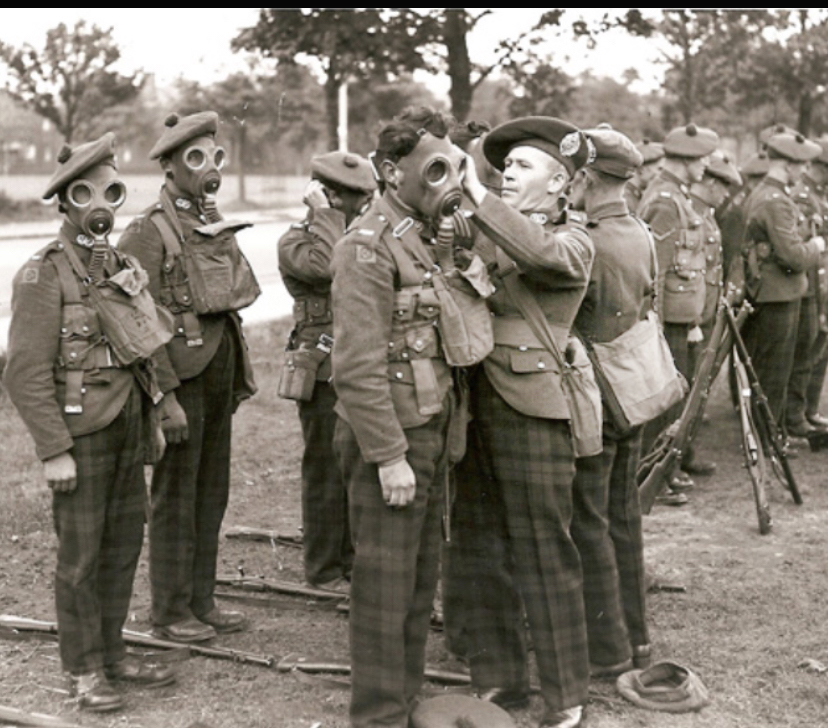
Stanley was with the Cameron Highlanders. He was born on June 14, 1923 in Poltimore, Que.. He went to school where seven classes shared one room. He was a penpal with Edith after he joined the army. He was supposed to meet her at a picnic but he was late getting there and Edith was gone. He never did meet her until after the war and he landed at Lansdowne Park. They married shortly after. There is a love story here if one were to pursue it.
When the ramp came down on the landing, men all around him were hit or killed. Those trying to escape the carnage went over the sides only to be drowned with all their gear. These men, Mr. Hogg, said were his friends – boys he trained with for months. Now they are gone. He remembers before the invasion how everyone was itching for a fight. Now they just wanted to be home. For a lot of them, the war was over before it began.
“He gave his life for his country,” is a phrase that Stanley Hogg said is all wrong. “We put our lives on the line but our lives were taken unmercifully and horribly. I saw boys lying on the beach holding their intestines between their fingers crying for their mothers. “There is no glory in war but sometimes we have no choice.” “We were told to run forward when the ramp came down, to run like hell toward the machine guns that are trying to kill you. When your courage ran out your training kicked in,” he said.
“Were you scared?” I asked. “Not only scared. I was terrified. Anybody that said they weren’t frightened was either lying or a damn fool.” We were no different than you. We put our lives on the line but we had no intention of giving them up. We all wanted to go home and live in peace. No one hates war more than veterans.
Stanley Hogg’s epic journey would take hours to relate. Some parts were funny, some good memories but a lot of it he would rather forget. “From failing hands we pass the torch for you to hold it high.”
Sadly, since I interviewed Mr. Hogg he passed away. I feel blessed to have known him.
Thank God me, nor my children, had to go to war. Also thank Stanley Hogg for without him and his comrades we would be living in a very different world today. Lest we forget. The least we can do is when we see a veteran, thank them. and take the buds out of your ears.
Lawrence Stafford
Cette réflexion sur la signification du Jour du Souvenir a été écrite par Stanley Hogg, vétéran de la Seconde Guerre mondiale et résident de longue date de Shawville, avant son décès en 2016 à l’âge de 93 ans.
La réflexion de M. Hogg a été partagée avec THE EQUITY par Lawrence Stafford, résident de Campbell’s Bay, qui a appris à connaître M. Hogg dans les dernières années avant son décès.
M. Stafford a dit avoir passé de nombreuses heures à écouter M. Hogg et son épouse Edith raconter les expériences de M. Hogg pendant la guerre, qui a commencé avec le jour J. M. Stafford a dit espérer que le partage du texte ci-dessous, ainsi qu’un texte d’accompagnement qu’il a écrit à son sujet, honorerait son ami disparu.
« J’aurais aimé le faire plus tôt », a-t-il dit à THE EQUITY . « Parce que c’était un être humain formidable et j’aimerais juste que les gens sachent qu’il a vécu et ce qu’il a fait. »
Le Jour du Souvenir est une journée mise de côté par respect et en souvenir de mes camarades qui ont fait le sacrifice suprême afin que nous puissions jouir de la liberté que nous avons aujourd’hui.
J’encouragerais chacun d’entre vous à assister au service du Jour du Souvenir, en particulier les jeunes. Cela me rend si triste quand je vois si peu de monde rassemblé pour le service. Je serai là aussi longtemps que je le pourrai, même si je dois être en fauteuil roulant.
Beaucoup de gens m’ont dit : « Il fait toujours si froid le Jour du Souvenir », mais je peux leur dire : « Il ne fait pas la moitié moins froid qu’en hiver 1944-1945 quand nous avancions vers l’Allemagne. » Nous dormions dehors. La nourriture, si nous en avions, gelait dans nos gamelles et il n’y avait pas d’eau chaude pour les laver. Nous mangions des rations américaines ou nous tuions les animaux des fermiers. Après six mois, juste avant Noël, nous avons eu notre premier pain, une demi-tranche par jour, puis, à notre demande, une tranche entière tous les deux jours.
Quand je me tiens debout pendant le service du Jour du Souvenir et que je ferme les yeux, je vois les visages et je me souviens des noms de nombreux de mes camarades qui ont fait le sacrifice suprême. Je peux voir tous les morts et tous les blessés, des milliers d’entre eux gisant sur la plage le jour J, mon chauffeur devant zigzaguer à travers eux et entendre certains implorer de l’aide alors qu’il ne faut pas s’arrêter.
Après avoir quitté l’armée, j’ai essayé d’oublier les années de guerre, mais la guerre est quelque chose que l’on ne peut jamais, jamais effacer de son esprit. Je me réveillais la nuit et j’essayais de comprendre comment j’avais pu rentrer chez moi et tant de mes camarades non. J’ai eu trois chauffeurs différents et plusieurs remplaçants dans mon équipe d’artillerie. Je me sentais coupable, comme si je les avais laissés tomber, mais je sais que c’est seulement par la grâce de Dieu que je suis ici aujourd’hui. Edith disait que je faisais des cauchemars. Je me réveille encore le matin et je revis les batailles encore et encore.
La grandeur parmi nous
Le vieil homme et son épouse marchaient lentement dans la rue. Personne ne les a remarqués, ni ne s’est arrêté pour dire bonjour ou les saluer de quelque manière que ce soit. Ce n’est pas si inhabituel dans le monde d’aujourd’hui, où tout le monde a quelque chose coincé dans l’oreille, parlant à quelqu’un à des kilomètres de distance.
En regardant les passants, j’ai pensé : « Ne savent-ils pas qu’il y a un héros parmi eux ? » Plus grand qu’un athlète professionnel ou une star de cinéma. Pourquoi ? Parce que lorsqu’il n’était guère plus qu’un garçon, il a risqué sa vie pour le Canada. Lui et de nombreux jeunes hommes à travers cette grande nation sont allés dans des pays étrangers pour se battre pour notre liberté. L’un de ces héros vit parmi nous.
Stanley Hogg m’a accordé le privilège et l’honneur, il y a quelques années, de l’enregistrer alors qu’il me racontait ce qui lui était arrivé pendant la Seconde Guerre mondiale. Sous l’impulsion de son épouse Edith, il m’a raconté à contrecœur son histoire sur son périple à travers une France déchirée par la guerre. Jamais il ne s’est présenté comme un héros. « Nous avons juste fait ce que nous avions à faire », a-t-il dit.
Il s’est entraîné pendant des mois avant d’être envoyé en Angleterre où il s’est encore entraîné. Sa première action est survenue lorsque le pont-levis du transporteur de troupes flottant s’est abaissé alors qu’ils approchaient de la plage Juno le 6 juin 1944. « Ce jour-là, soit tu grandissais, soit tu ne grandissais pas du tout », a dit Stanley. Le jour J fut la plus grande invasion de l’histoire de l’humanité.
Stanley faisait partie des Cameron Highlanders. Il est né le 14 juin 1923 à Poltimore, au Québec. Il est allé à l’école où sept classes partageaient une seule pièce. Il a correspondu avec Edith après avoir rejoint l’armée. Il était censé la rencontrer à un pique-nique, mais il est arrivé en retard et Edith était partie. Il ne l’a jamais rencontrée avant la fin de la guerre, lorsqu’il a débarqué au parc Lansdowne. Ils se sont mariés peu après. Il y a une histoire d’amour ici, si l’on voulait la raconter.
Lorsque la rampe du débarquement s’est abaissée, des hommes tout autour de lui ont été touchés ou tués. Ceux qui tentaient d’échapper au carnage ont sauté par-dessus bord pour se noyer avec tout leur équipement. Ces hommes, a dit M. Hogg, étaient ses amis – des garçons avec qui il s’était entraîné pendant des mois. Maintenant, ils sont partis. Il se souvient qu’avant l’invasion, tout le monde était impatient de se battre. Maintenant, ils voulaient juste rentrer chez eux. Pour beaucoup d’entre eux, la guerre était finie avant même d’avoir commencé.
« Il a donné sa vie pour son pays », est une phrase que Stanley Hogg a jugée complètement fausse. « Nous avons mis nos vies en jeu, mais nos vies ont été prises sans pitié et horriblement. J’ai vu des garçons allongés sur la plage tenant leurs intestins entre leurs doigts, pleurant leurs mères. « Il n’y a pas de gloire dans la guerre, mais parfois nous n’avons pas le choix. » « On nous a dit de courir vers l’avant quand la rampe s’est abaissée, de courir comme des diables vers les mitrailleuses qui essayaient de nous tuer. Quand votre courage s’épuisait, votre entraînement prenait le relais », a-t-il dit.
« Aviez-vous peur ? » ai-je demandé. « Pas seulement peur. J’étais terrifié. Quiconque disait ne pas avoir peur était soit un menteur, soit un sacré idiot. » Nous n’étions pas différents de vous. Nous avons mis nos vies en jeu, mais nous n’avions aucune intention de les abandonner. Nous voulions tous rentrer chez nous et vivre en paix. Personne ne déteste la guerre plus que les vétérans.
Le parcours épique de Stanley Hogg prendrait des heures à raconter. Certaines parties étaient drôles, d’autres de bons souvenirs, mais une grande partie de cela, il préférerait l’oublier. « De nos mains défaillantes, nous vous passons le flambeau pour que vous le teniez haut. »
Malheureusement, depuis que j’ai interviewé M. Hogg, il est décédé. Je me sens béni de l’avoir connu.
Dieu merci, ni moi ni mes enfants n’avons eu à faire la guerre. Remercions également Stanley Hogg, car sans lui et ses camarades, nous vivrions aujourd’hui dans un monde très différent. N’oublions jamais. Le moins que nous puissions faire, c’est de remercier un vétéran quand nous en voyons un. Et de retirer les écouteurs de nos oreilles.
Lawrence Stafford